HR Radar is a weekly briefing on the developments and trends shaping HR and HR technology, written for HR and people teams in small and mid-sized European companies.
Big picture: accountability is the new buying criterion
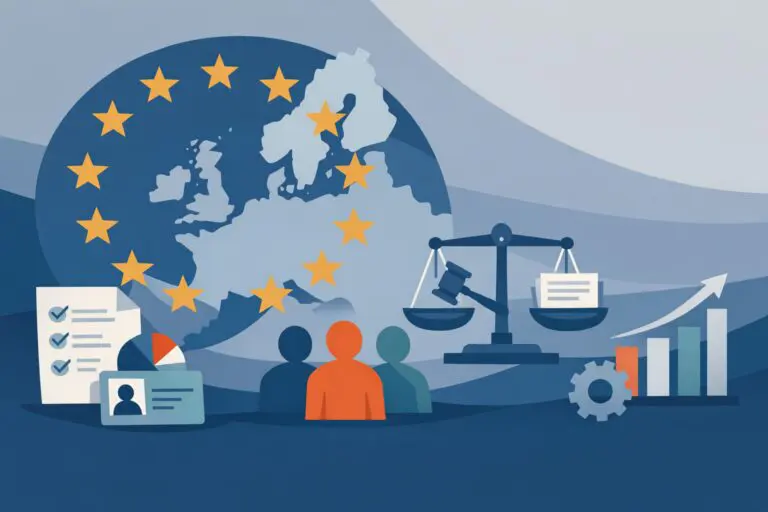
UNLEASH opened September by asking its analyst panel which single factor will decide who wins HR tech contracts over the next 12 months. The answers converged on one theme: not features, but accountability. Cheney Hamilton of Bloor Research pointed to a US federal court ruling that an HR software vendor must face discrimination claims over its AI hiring tools, and noted that the EU AI Act’s employment provisions have been deferred to late 2027, so buyers rather than regulators will do the sorting for now. Legal teams now sit in procurement and buy on documented audit trails, bias testing evidence and contractual liability positions. Valérie Fichelle of NexaRH added a second shift: buyers increasingly ask whether a platform is open and controllable through AI assistants, including whether it offers an MCP (Model Context Protocol) server, rather than whether it has its own AI features.
Why it matters: SME HR teams rarely have a general counsel in the room, which makes the questions even more important to ask yourself. Before signing for any tool that screens, ranks or scores people, get a written answer to three things: who is accountable when the tool gets it wrong, how bias is tested and where your data lives and who can reach it.
On the radar
No jobs apocalypse, a labour shortage instead. In a podcast published on 10 September 2026, Josh Bersin argued that the AI story for HR is not mass job losses but an AI-fuelled labour shortage, with output rising faster than headcount. His conclusion is that HR is moving from “policy police” to a growth function, and that human capital and leadership strategy become more important as companies reorganise around AI, not less. For a small HR team, that reframes the AI conversation from cost-cutting to capacity: what does the team do with the hours that automation frees up?
Gen Z wants coherence, not less technology. A widely shared UNLEASH opinion piece by Jess Von Bank (10 September 2026) challenges the assumption that younger employees are resisting AI. Her early-career colleagues describe the problem as corporate incoherence: another app, another mandate, no explanation of why it matters. They also draw a line between wanting less digital noise in their personal lives and wanting access to AI at work, and they ask direct questions about surveillance, data use and whether human judgement stays in the loop. The piece warns that automating “mundane” junior tasks can quietly remove the apprenticeship where judgement is learned.
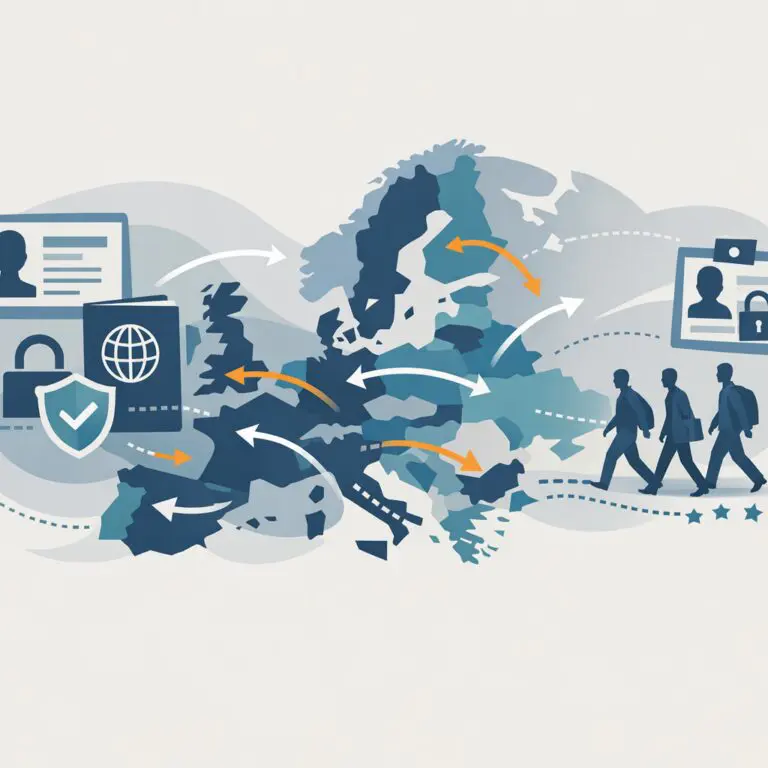
Pay transparency: the catch-up phase. The transposition deadline for the EU Pay Transparency Directive passed on 7 June 2026, and Pinsent Masons’ member state tracker shows implementation remains uneven, with several countries notifying the Commission that their legislation would not be ready on time. The obligations that apply regardless of company size are the ones SMEs should focus on first: salary ranges at the recruitment stage, no questions about salary history and employees’ right to information about pay levels. Gender pay gap reporting starts with employers of 250 or more from 2027 (using 2026 data), with smaller thresholds phased in later.
Zukunft Personal Europe opens in Cologne. Europe’s largest HR expo runs from 15 to 17 September 2026 at Koelnmesse under the motto “Team Human × AI”. The organiser, CloserStill Media, frames 2026 as the year AI becomes everyday practice in HR, with the programme built around two questions: how AI changes people’s work, and what AI means for HR itself. A curated guided tour groups exhibitors into “processes and decisions with AI” (workforce management, HR services, data-driven decisions) and “people, health and learning with AI” (personalised learning paths, wellbeing, talent development). Expect the vendor messaging that follows this week to echo those two tracks.
Skills shortages are now a delivery problem. SHRM’s 2026 Talent Trends research reports that 68% of HR professionals find it difficult to recruit full-time employees, 58% say skills shortages caused project delays in the past year and 51% say projects were cancelled as a result. SHRM’s framing is that organisations cannot hire their way out of this and should combine skills-based hiring with internal development.
HR tech watch
Mistral raises €3bn for “sovereign AI”. Tech.eu reported on 8 September 2026 that French AI company Mistral has closed a €3bn Series D at a post-money valuation of more than €21bn, led by Samsung Electronics with EQT’s Scaleup Europe Fund and PSG Equity as co-leads. Mistral positions itself around organisations that want control over where data is stored, how models are customised and which infrastructure runs them, and says it supports more than 125 enterprises across 20 countries. The relevance for HR: expect more HR tools, including European ones, to offer EU-hosted model options as a differentiator.
Europe’s early-stage funding gap. Research from Antler, published on 10 September 2026, analysed more than 81,000 European funding rounds and found that fewer than one in 10 seed-stage startups now progress to Series A (9.3% for the 2023 cohort, down from 23.3% between 2008 and 2019). The number of investors active at pre-seed and seed has fallen 42% since 2022. For HR buyers this is a vendor-risk signal: a young HR tech startup with a strong product may still struggle to raise its next round, so ask about runway and data export before you commit.
The 2026 HR tech funding picture: fewer moonshots, more incumbents. UNLEASH’s mid-year review of HR tech funding, quoting Drake Star’s Ralf Hofmann, describes 2026 as a “disciplined recovery” in which large cheques go to companies with sustained, profitable growth. The headline European rounds this year include Factorial’s $150m Series D at a $2.5bn valuation and Multiverse’s $70m round at a $2.1bn valuation, while Tech.eu reported in August that employee experience platform Flip raised $25m to expand its AI platform for frontline workers. Hofmann’s advice to buyers: read a credit facility as balance-sheet discipline and an equity round as growth ambition, and treat both as signals of how a vendor will behave over the next 18 months.
For SME HR teams
Three practical moves this week. First, add an accountability section to any HR software evaluation you’re running: who is liable for automated decisions, how bias is tested and where data is hosted. Second, if you hire in the EU, check that your job adverts already show a salary range and that interviewers know not to ask about salary history, because those obligations apply to every employer, not just those with 250 staff. Third, if you’re rolling out an AI tool, write a one-page explanation of why it exists and which tasks it takes over, and ask your newest hires which tasks they’d rather keep for their own learning. Coherence costs nothing and does more for adoption than another training session.
Sources
- UNLEASH: what single factor will decide who wins and loses vendor contracts in the next 12 months
- Josh Bersin: the AI-fuelled labour shortage and why HR is now a growth function
- UNLEASH: stop guessing what Gen Z wants from AI, ask them
- Pinsent Masons: EU Pay Transparency Directive implementation across member states
- CloserStill Media: Zukunft Personal Europe 2026, Team Human × AI (German)
- SHRM: 2026 Talent Trends report
- Tech.eu: Mistral secures €3bn Series D
- Tech.eu: Antler research on Europe’s early-stage funding gap
- UNLEASH: what the biggest 2026 HR tech funding rounds tell buyers
- Tech.eu: Flip raises $25m for its frontline AI platform
HR Radar is a weekly informational summary of publicly reported HR and HR technology developments and trends. It is not legal or professional advice.