A successful HRIS rollout example for SMEs rarely starts with technology. It starts when an HR manager realises they are spending Monday morning correcting leave balances, chasing signed policies and answering the same employee questions in three different systems. The right rollout replaces that friction without creating a six-month internal project that a small HR team cannot sustain.
Consider a fictional but realistic business: a 120-person engineering firm headquartered in Belgium, with employees in the Netherlands and Germany. Its two-person HR team uses spreadsheets for employee records, a separate leave tool, shared folders for onboarding documents and another platform for recruitment. Payroll is handled externally. Data is duplicated, managers lack visibility and audit preparation is more stressful than it needs to be.
The firm chooses to introduce one HRIS over 90 days. Here is what that rollout looks like, including the decisions that made adoption more likely.
Start the HRIS rollout with a defined problem
The project sponsor does not tell the business that it is “implementing a new HR system”. That message is too abstract. Instead, the HR lead sets three measurable goals: create one reliable employee record, give employees a self-service route for leave and personal data updates, and make onboarding consistent across all three countries.
That scope is deliberately narrow. Recruitment, performance reviews, expenses and learning are all valuable modules, but they do not need to go live on day one. For a growing SME, a phased approach limits disruption and gives the team time to establish good data and working habits.
The HR lead also names a small decision group: HR, finance, one IT Kontakt and two managers from different countries. This group meets weekly for 30 minutes. Their job is to resolve decisions quickly, rather than turn every configuration detail into a committee discussion.
Decide what stays outside the HRIS
A common mistake is assuming that one platform must replace every tool immediately. It depends on the business. If payroll is already managed well by a local provider, the first phase may only need a clean export process and agreed ownership of payroll changes. If a specialist recruitment tool is embedded in the hiring process, it may remain in place temporarily.
The principle is simpler: the HRIS should become the trusted source for people data. Other systems should not become competing versions of the employee record.
Days 1 to 30: clean data before moving it
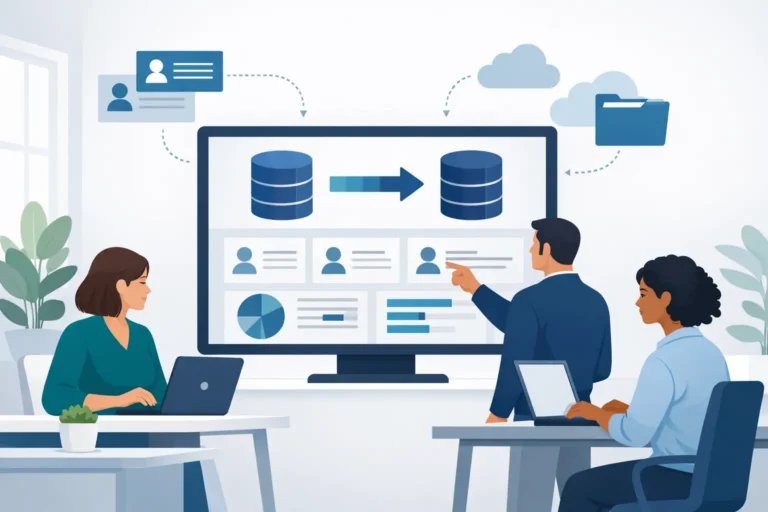
The firm begins by exporting data from its spreadsheets and existing tools. It finds 17 different job title formats, missing emergency contacts and several former employees still listed as active. None of this is unusual. Data migration often reveals operational issues that were hidden by disconnected processes.
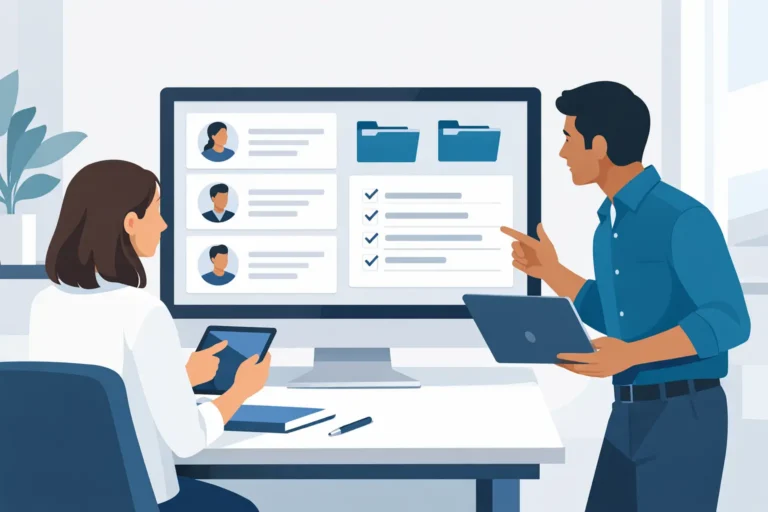
Rather than importing everything, HR creates a data standard. Each field has an owner, a format and a reason for existing. For example, HR owns contractual details, employees update personal contact information and managers confirm reporting lines. Fields that nobody uses, such as an old internal grading code, are not migrated merely because they exist.
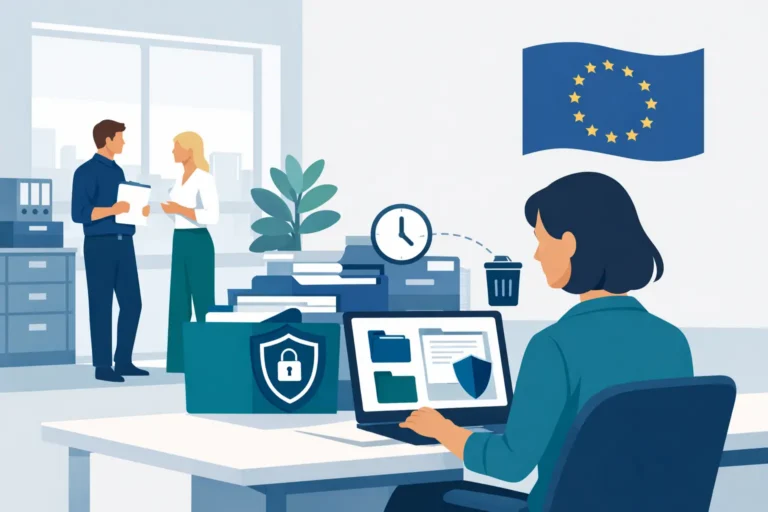
For a European SME, this is also the point to consider data protection properly. The team checks which personal data is necessary, who needs access and how long records should be retained. Country-level variation matters. A leave policy, document requirement or approval route may differ across Belgium, the Netherlands and Germany, so copying a single process across every location can create more work later.
The IT contact reviews identity and access requirements. Managers should see their teams, employees should see their own details and HR should have broader access without sharing a generic administrator login. If the organisation has strong requirements around data residency and isolation, those questions belong in vendor selection and configuration, not as an afterthought before launch.
By the end of the first month, the team has a validated employee data file, a list of required documents and a clear set of roles. This is less glamorous than a product demonstration, but it is where much of the eventual value is created.
Days 31 to 60: configure real work, not ideal work
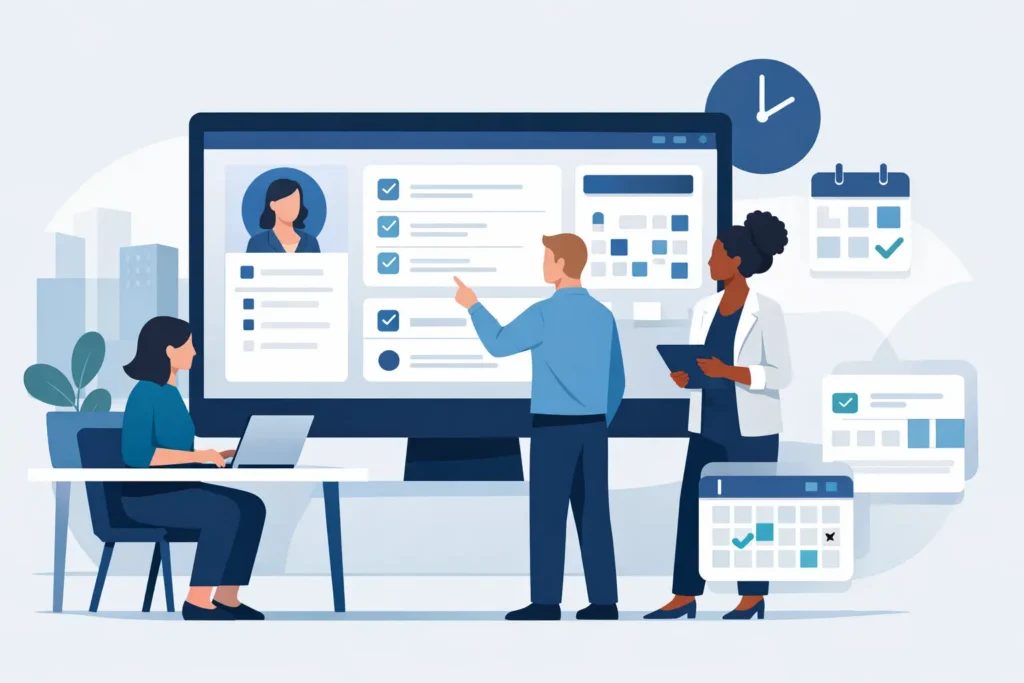
Next, the firm configures the workflows employees and managers will actually use. The first release includes employee profiles, an organisation chart, leave requests, document storage and onboarding checklists. The HR team resists adding every possible approval rule. A manager approves annual leave, HR handles exceptions and finance only joins the process where an action affects payroll.
Die onboarding workflow is built around the first 30 days of employment. Before a new starter joins, HR collects required details and documents. On day one, the manager receives a checklist covering introductions, equipment and role expectations. During the first month, the employee completes key policy acknowledgements and a probation check-in is scheduled.
This replaces informal handovers with a consistent experience, while still allowing managers to add role-specific tasks. That balance matters. Overly rigid workflows frustrate teams, but completely open processes bring back the gaps the HRIS was meant to remove.
Test with difficult scenarios
Before inviting the whole company, the project group runs test cases. They create a new joiner in Germany, a manager transferring teams, an employee returning from long-term leave and a leaver whose access must be removed. They also test a leave request that crosses a public holiday and an approval when the usual manager is absent.
These tests are more useful than asking whether the screens look right. They reveal whether notifications reach the right people, whether permission settings work and whether HR can produce the information it needs without manual intervention.
The team logs each issue, assigns an owner and separates launch-critical fixes from improvements that can wait. Perfection is not the target. A safe, understandable process is.
Days 61 to 90: launch with support and clear expectations
The firm launches first with a pilot group of 20 employees from HR, finance and one engineering team. The pilot lasts two weeks. Participants update their details, request leave and complete a mock onboarding task. Their feedback leads to small but meaningful changes: clearer wording on the leave request screen, a shorter manager checklist and a better explanation of who can view employee information.
For the company-wide launch, HR sends a short message focused on what changes for each audience. Employees are told where to update their details and request leave. Managers receive a 30-minute session on approvals, team visibility and onboarding tasks. HR publishes a simple support route, so questions do not disappear into individual inboxes.
Training should be role-based and brief. Most employees do not need a tour of every module. They need confidence that they can complete their next task without asking HR for help. Managers need to understand that delayed approvals create downstream work for their teams and payroll.
During the first month after launch, the HR lead reviews adoption every week. Are leave requests coming through the system? Are managers completing onboarding tasks? Which questions are repeated? If employees continue to send holiday requests by email, the issue may be communication, system design or a manager who is still accepting the old process.
A platform such as Cognitis.cloud can support this consolidation by bringing core HR processes into one dedicated European environment. But the platform alone does not create adoption. Clear ownership, sensible configuration and follow-through do.
What made this SME rollout work
The 90-day timeline worked because the business did not try to transform every HR process at once. It focused on the employee record, self-service and onboarding, then created a reliable base for later phases such as performance, expenses and learning.
It also treated migration as a data-quality exercise, not a technical upload. That distinction is crucial. Poor data simply moves old confusion into a new system, often with more visibility and more consequences.
Finally, the HR team planned for the first weeks after go-live. Questions, corrections and resistance are normal. The aim is not to eliminate them, but to respond quickly enough that employees learn the new system is easier than the workaround.
For SMEs, a good HRIS rollout is not judged by how many features launch on one date. It is judged by whether HR has fewer manual corrections, managers take clearer ownership and employees know where to go when they need something. Build that confidence first, then expand from a foundation your team can trust.