When an employee asks where their salary details, absence records or performance reviews are stored, “in the cloud” is no longer an adequate answer. For a growing business, EU hosted HR software gives HR and IT a clearer basis for answering: where the data sits, who can access it and how it is protected.
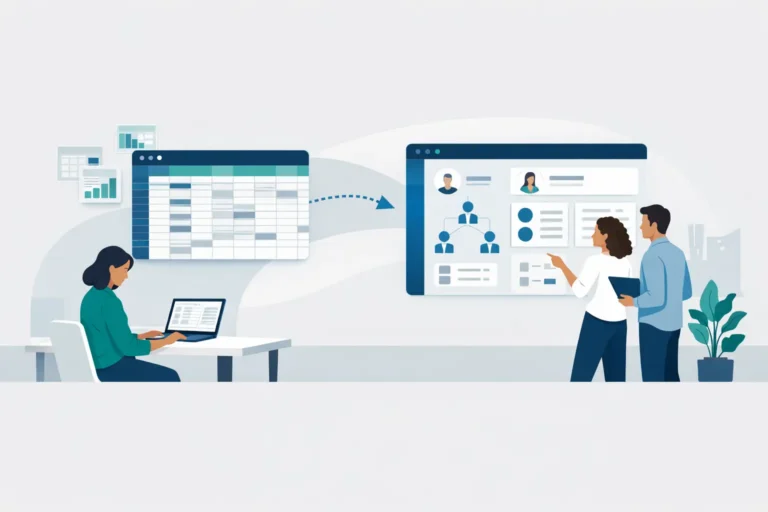
That clarity matters most when HR is spread across spreadsheets, recruitment tools, expense apps and shared folders. Each system may solve one problem, but together they create duplicate records, manual handovers and uncertainty over which data is held where. Choosing an HR platform with EU hosting is an opportunity to simplify the stack, not merely move the same complexity to a new supplier.
What EU hosted HR software should mean
The term can be used loosely, so it is worth asking precise questions. At a minimum, it should mean that your organisation’s HR data is stored and processed in data centres within the European Union. That supports your approach to GDPR, but hosting location alone does not make a platform compliant.
A meaningful assessment also covers the supplier’s contractual commitments, access controls, retention settings, security practices and use of sub-processors. If support teams or infrastructure providers can access personal data from outside the EU, understand when that happens, why it is necessary and what safeguards apply.
For HR teams, the practical issue is accountability. You remain responsible for handling employee data appropriately, even when a software provider processes it on your behalf. A supplier should make it straightforward to understand the data flow rather than hide it behind broad assurances.
Data residency and data ownership are different
EU data residency describes the location of data. Data ownership concerns your rights over it: whether you can export it in a usable format, set retention periods and remove it when required. Both matter when you manage sensitive employee information.
Ask what happens if you leave the platform. Can you retrieve employee files, historical leave records, audit trails and performance documentation without an expensive or impractical extraction project? A clear exit process is a sign of a provider that treats your data as yours.
Shared infrastructure versus dedicated environments
Many cloud platforms run customer data in shared environments. This can be a sensible model for some organisations, but it requires confidence in the provider’s logical separation and operating controls.
A single-tenant PaaS model gives each customer a dedicated, isolated environment. For SMEs with strict privacy expectations or cross-border workforces, that can make governance easier to explain internally. It is not automatically the right choice for every business – the question is whether the model matches your risk profile, budget and need for control.
Why hosting decisions become an HR operations issue
Hosting is often treated as an IT procurement detail. In reality, it affects routine HR work. Every recruitment application, medical certificate, expense claim and manager note adds to the personal data your organisation must manage carefully.
Fragmented systems make that task harder. A new starter’s details may be copied from an applicant tracking tool into payroll, then into a leave system and an onboarding checklist. When an employee changes role or leaves, HR has to update or review records across several places. The work is repetitive, and each copy introduces another opportunity for errors or excessive access.
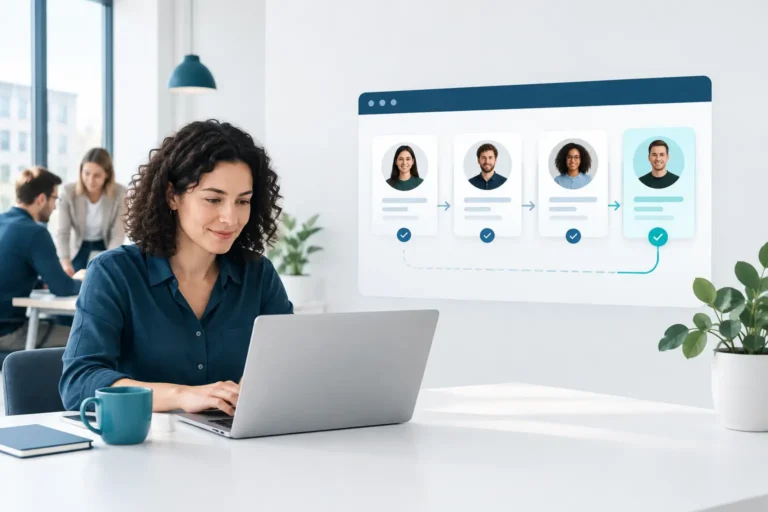
One connected HRIS changes the operational picture. Recruiting, onboarding, time and attendance, leave, expenses, reviews and learning can use a common employee record. That reduces rekeying and gives managers a clearer view of the information they are permitted to see. It also makes it easier to establish consistent processes as headcount grows from 30 people to 150 or 300.
The benefit is not that HR suddenly becomes effortless. Local rules, approval routes and exceptions still need thoughtful configuration. The gain is that your team spends less time reconciling systems and more time handling the decisions that need human judgement.
Questions to ask before choosing EU hosted HR software
A good sales demonstration should answer more than whether the interface looks easy to use. Use the evaluation to test how the platform will work in your actual operating environment.
Start with data location. Ask where production data, backups and disaster recovery environments are hosted. Request a clear explanation of which entities process data and whether any sub-processors are involved. If your business operates across Benelux, DACH or other European markets, confirm that the provider can support your structure without forcing every country into one generic process.
Then examine access. Role-based permissions should allow HR, managers, finance and employees to see only what they need. Check whether you can control access to sensitive documents, record changes and remove access promptly when roles change. An audit trail is particularly useful when dealing with employee requests or internal investigations.
Also ask about integration and consolidation. A platform does not need to replace every business system to reduce complexity. It should, however, remove unnecessary overlap. If you retain a specialist payroll provider, for example, confirm how employee changes are shared and who owns the source of truth. The aim is to avoid creating a new data silo with a better interface.
Finally, test the supplier’s support model. A growing SME may not have a dedicated HR systems administrator. You need practical implementation guidance, accessible support and a clear route for resolving issues. The best platform fit is often the one your small HR team can run confidently after launch.
AI needs the same governance as HR data
AI capabilities can save time in HR, particularly for drafting job descriptions, summarising policies, answering routine HR questions and triggering workflow steps. But AI introduces another question: what happens to the information entered into the tool?
Before enabling AI features, establish whether prompts and outputs are processed within your agreed environment, whether they are retained and which model provider is used. A provider-agnostic approach can be valuable where your organisation has requirements around a particular model or prefers a self-hosted option. It gives you more choice than an AI feature tied permanently to one external service.
The right standard is practical control. HR should be able to decide which use cases are appropriate, limit sensitive inputs and retain human review for employment decisions. AI can accelerate administration, but it should not become an opaque decision-maker for recruitment, performance or employee relations.
Build the business case around fewer handovers
The strongest case for an EU-hosted platform is rarely hosting alone. It is the combined effect of better data control and less operational friction.
Consider the time taken to onboard a new employee. HR gathers documents, sends policy acknowledgements, sets up leave eligibility, confirms equipment, introduces required learning and informs the manager. Across disconnected tools, that can mean several manual updates and a chain of reminders. In one platform, a structured workflow can assign tasks, show progress and keep the employee record current from day one.
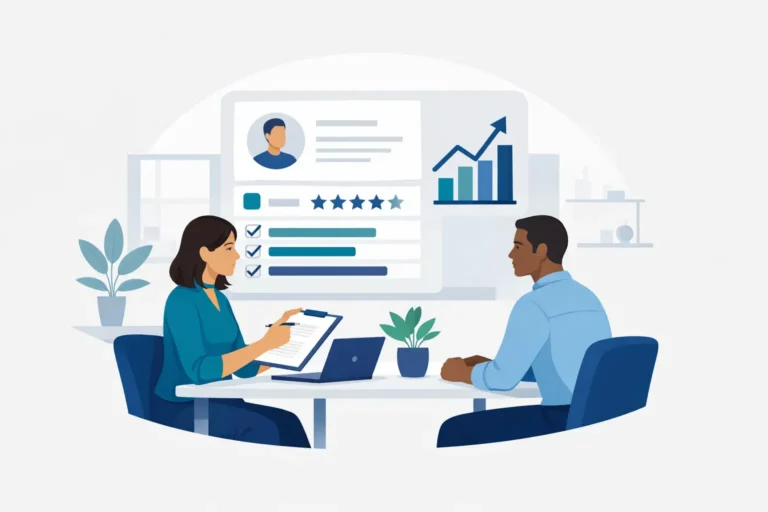
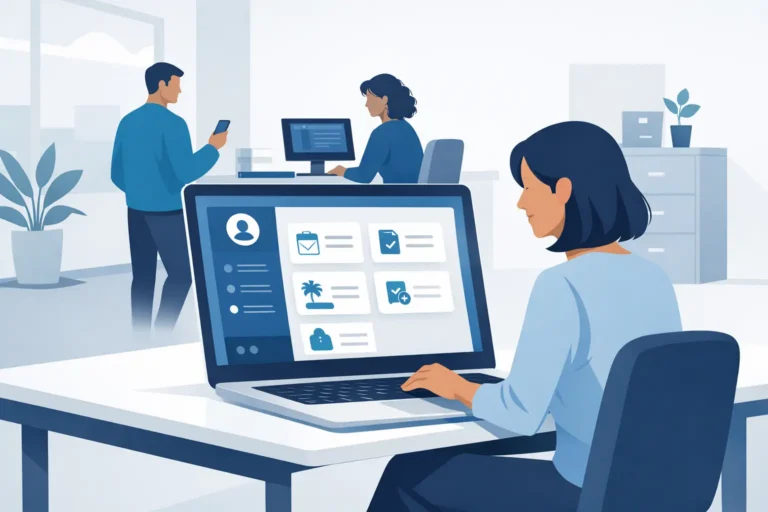
The same applies to absence reporting, expenses and performance cycles. A single system gives employees a familiar place to complete routine tasks, while HR gains cleaner data for reporting and compliance checks. For lean teams, fewer systems also mean fewer vendor renewals, permissions reviews and support queues.
There are trade-offs. A broad HRIS may not match every specialised feature of a standalone tool. If a complex payroll engine or sector-specific learning system is central to your business, integration may be preferable to replacement. The right decision is based on the processes that consume the most time, create the most risk or frustrate employees most often.
A practical route to a better HR stack
Before comparing providers, map your current employee data journey. Identify where data is created, copied, approved, stored and deleted. Include the less obvious places: shared drives, mailbox folders, manager spreadsheets and forms created for one-off processes.
Next, decide what must be centralised. For many SMEs, the priority is a dependable core employee record connected to onboarding, leave, time, expenses and performance. Recruiting and learning can then follow if they are currently causing duplicated work. This approach helps prevent an over-scoped implementation that overwhelms a small team.
Cognitis.cloud is designed around this reality: one HRIS for European SMEs that need broad HR capability without the overhead of enterprise software. Its single-tenant PaaS model keeps each customer in a dedicated EU environment, while connected workflows reduce the need to maintain five separate HR tools.
A useful next step is to take your three most frequent HR processes and ask a simple question of every supplier: can our team run these securely, consistently and without moving the same employee data between systems? The answer will tell you far more than a feature checklist.