A missed holiday balance, a contract stored in someone’s inbox and a manager chasing three systems for a performance review are not isolated admin problems. They are signs that HR operations have outgrown the current setup. Knowing how to choose HRIS software means identifying the work your team needs to make reliable before choosing the features that look impressive in a sales demonstration.
For an SME with 10 to 500 employees, the right system should reduce manual handovers without introducing enterprise-level complexity. It should give HR, managers and employees a clear place to complete everyday tasks, while giving leadership confidence in the underlying data.
Start with the operational problems, not a feature checklist
Most HRIS projects begin with a long list of requested features. That is understandable, but it can lead to buying a broad platform that solves little of the day-to-day friction. Start instead by mapping the employee journey, from recruitment through to leaving the organisation.
Ask where information is entered more than once, where approvals get stuck and which reports take too long to prepare. For a small HR team, the recurring issues are often onboarding documents, absence tracking, time records, employee changes, expense approvals and manager-led reviews. If you operate across countries, local contracts, leave rules and access to employee data should be part of the same conversation.
Turn these findings into a short set of outcomes. For example: managers can approve leave without emailing HR, new starters complete required tasks before day one, or payroll receives a consistent monthly export. Outcomes are easier to assess than vague requirements such as “better reporting”.
How to choose HRIS requirements that will still fit next year
An HRIS should fit the organisation you are becoming, not just the one you are today. This does not mean paying for every possible module in advance. It means checking whether the platform can support the next stage of growth without forcing you to replace it after a year or two.
Consider likely changes over the next 18 to 24 months. Will headcount rise quickly? Will managers take on more people responsibilities? Are you opening another European office? Are performance reviews becoming more structured? The answers affect what matters most.
A company of 30 employees may need straightforward employee records, leave management and onboarding first. At 150 employees, consistent approval workflows, role-based permissions, reporting and performance processes usually become more pressing. At 400 employees, integration governance, audit trails and local policy variations may carry greater weight. The best choice allows you to add structure as needed without making everyday work harder now.
Separate essentials from future options
Create three categories: non-negotiable requirements, useful requirements and later-stage requirements. Non-negotiables are the processes that must work from launch, such as employee data, leave calculations, time and attendance or compliant document storage. Useful requirements improve efficiency but can wait if necessary. Later-stage requirements might include learning programmes, advanced talent planning or complex analytics.
This distinction protects the project from scope creep. It also makes vendor conversations more productive because you can test the system against real priorities rather than a generic comparison sheet.
Test whether one platform genuinely reduces fragmentation
Consolidation is valuable when it removes duplicate work and gives people one dependable source of truth. It is less valuable when a platform claims to do everything but does each process poorly. The question is not whether every HR activity must sit in one system. It is whether the activities that share employee data and approvals can work together sensibly.
Recruiting, onboarding, employee records, absence, expenses and reviews often benefit from being connected. A new hire’s details should not need to be manually re-entered after an accepted offer. A manager should not have to switch tools to see an employee’s leave, onboarding progress and review history.
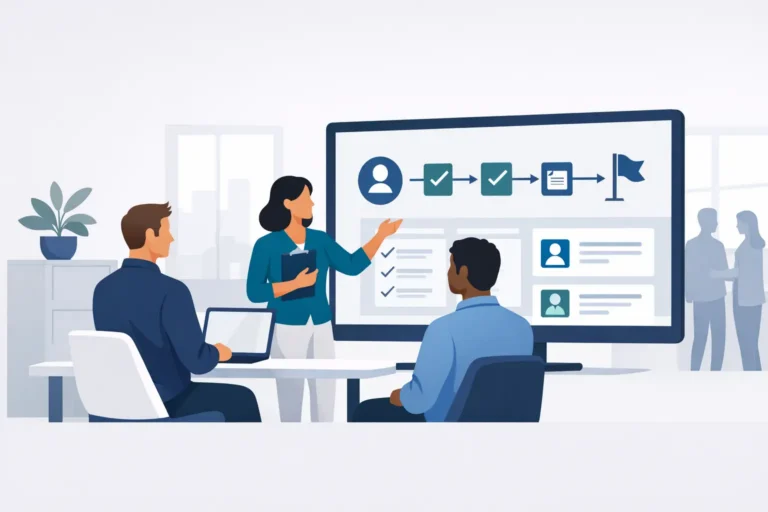
During evaluation, ask providers to show the handovers between modules, not just each module in isolation. Follow a realistic scenario: a candidate accepts an offer, becomes an employee, submits an expense, requests leave and completes a review. Look for duplicated fields, exports and manual interventions. These are where the hidden cost of a fragmented HR stack tends to remain.
Put data residency, privacy and access control at the centre
For European SMEs, HRIS selection is also a data governance decision. Employee records contain some of the most sensitive information an organisation holds, including compensation, absence, identification and, in some cases, health-related data.
Ask where data is hosted, who can access it, how access is logged and what happens when the contract ends. “GDPR compliant” alone is not a detailed answer. You need to understand the provider’s role, data processing arrangements, retention options and the practical process for exporting your data.
EU data residency may be a firm requirement for your organisation, customers or works council. A single-tenant environment can also matter when isolation and control are priorities. These choices may cost more than a shared, global software setup, so weigh them against your risk profile and internal governance expectations. For many growing businesses, clarity and ownership are worth more than the lowest monthly price.
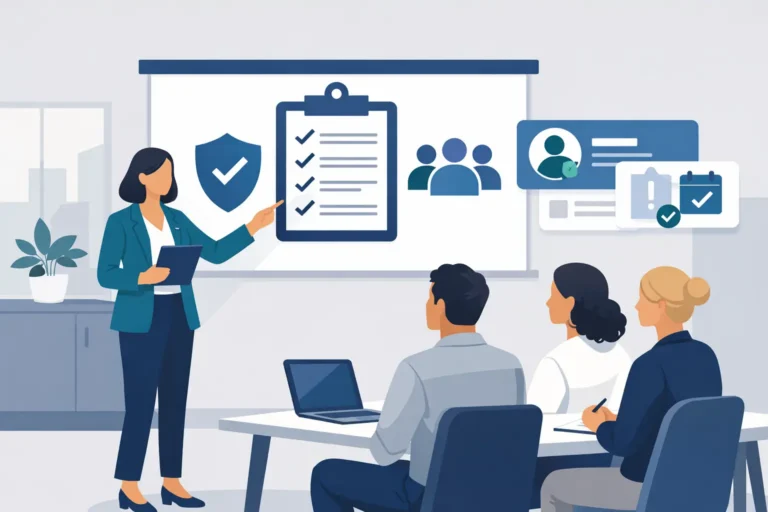
Permissions deserve equal attention. Employees should see their own information, managers should see what they need to lead their teams and HR should be able to administer policies without granting broad access unnecessarily. Ask to see role-based permissions in action, including how access changes when a manager moves role or an employee leaves.
Assess compliance through real scenarios
Compliance requirements vary across Europe, and even within a single organisation they may differ by entity, contract type and location. Avoid accepting a broad statement that a system “supports Europe”. Instead, bring your actual policies to the evaluation.
Test leave rules, public holidays, working-time records, approval history, document retention and audit trails. If your team works in Benelux or DACH, ask how the platform handles the practices relevant to your locations rather than assuming one standard configuration will suit every country.
A good HRIS gives you enough configuration to reflect legitimate policy differences. Too much configuration, however, can create a system only one specialist understands. This is an important trade-off: flexibility is useful until it makes implementation slow, reporting inconsistent or support difficult. Aim for configurable processes with sensible guardrails.
Look beyond AI claims to practical control
AI can help a small HR team draft content, answer routine policy questions and automate repetitive workflows. Used well, it can reduce the time spent on first drafts and common enquiries. It should not become an unchecked decision-maker for hiring, performance or employee relations.
Ask what AI is used for, which data it can access and whether users can review outputs before acting on them. If your organisation has a preferred AI provider, or requires a self-hosted model for particular use cases, establish whether the platform can support that choice. Provider flexibility matters when your AI governance develops over time.
The practical test is simple: can HR use the capability safely in a real workflow, with human oversight and clear controls? If the answer is unclear, treat AI as a future option rather than a deciding factor.
Evaluate implementation as carefully as the software
A capable product can still disappoint if the implementation assumes perfect data and unlimited internal time. For a lean HR team, migration, policy decisions, user training and launch communications all need a realistic plan.
Ask each provider what they need from you, who cleans and maps legacy data and how configuration decisions are documented. Clarify whether the quoted price includes implementation, training, support and integrations. A lower subscription cost can become expensive if essential setup work is left entirely to your team or an external consultant.
You should also understand the launch approach. A phased rollout is often safer when several disconnected tools are being replaced. Start with core employee data, onboarding and leave, then introduce areas such as expenses, performance and learning once adoption is established. A single launch can work for a simpler environment, but only if the scope is tightly controlled.
Make managers and employees part of the decision
HR may own the project, but managers and employees determine whether the system delivers value. If managers find approvals confusing, requests return to email. If employees cannot quickly update personal details or find a policy, HR tickets continue.
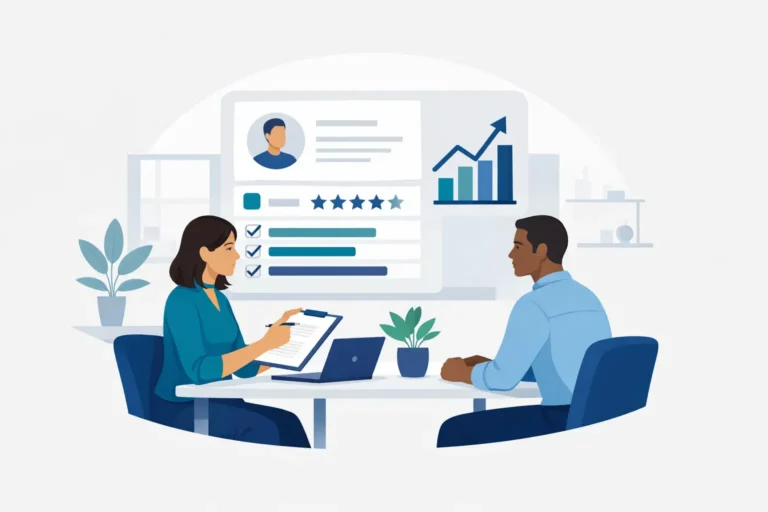
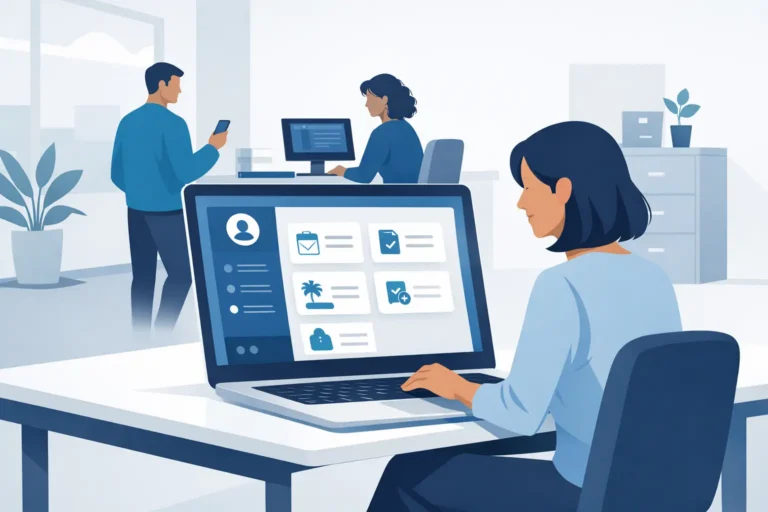
Include a few representative users in demonstrations and give them practical tasks. Can a manager approve a leave request on a phone? Can an employee find their remaining holiday allowance? Can a new starter complete preboarding tasks without needing a separate login? Their feedback will expose usability issues that a formal requirements document may miss.
Choose a partner with a clear fit
The strongest HRIS choice is rarely the platform with the longest feature list. It is the one that supports your highest-priority processes, protects employee data, fits your operating model and has a credible path for growth.
For organisations seeking to consolidate core HR processes in a dedicated European environment, Cognitis.cloud is designed around that balance: one platform for the work that commonly becomes fragmented, without the overhead of a large enterprise suite.
Before signing, ask for a final walkthrough using your own scenarios, confirm the full cost over the first year and document what success looks like six months after launch. A good decision leaves your team with less administration, clearer accountability and more time for the people work that cannot be reduced to a spreadsheet.