A hiring manager is chasing interview feedback in email. HR is updating leave balances in a spreadsheet. A new employee is waiting for policy documents, system access, and answers to basic questions. None of this is unusual in a growing business. It is also exactly where ai powered hr automation starts to create value.
For small and mid-sized companies, the problem is rarely a lack of effort. It is fragmentation. Recruiting sits in one tool, onboarding in another, employee records in shared folders, and routine questions land in HR inboxes all day. As headcount grows, those gaps turn into delays, errors, and compliance risk. The right automation does not replace HR judgment. It removes repetitive work so HR and operations teams can move faster and make better decisions.
What ai powered hr automation actually means
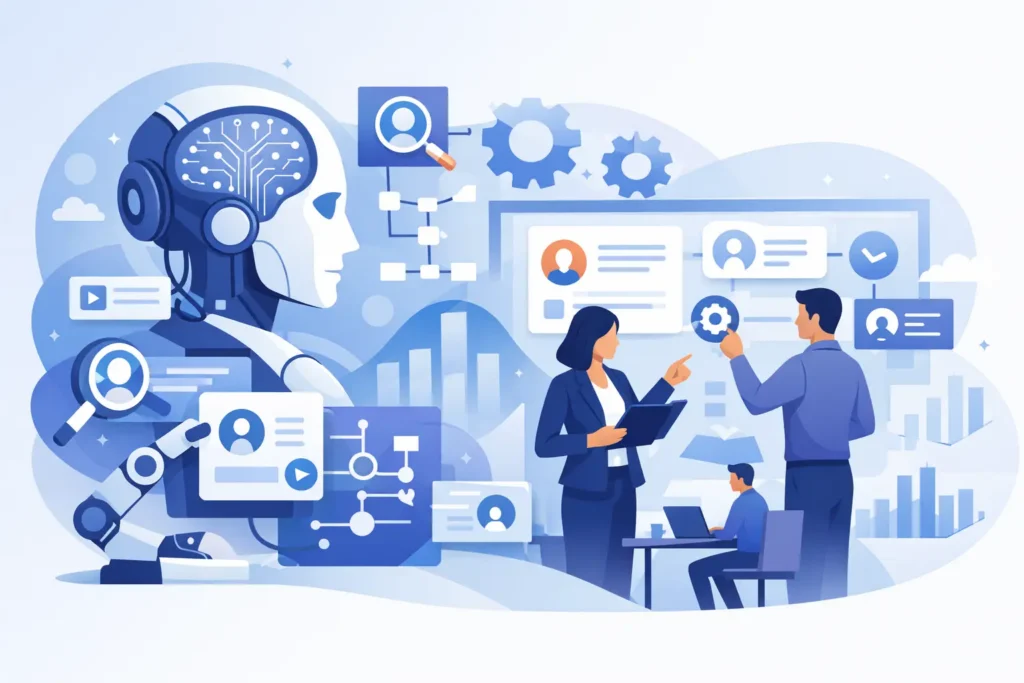
The term gets used loosely, so it helps to be specific. AI powered HR automation combines workflow automation with machine support for repetitive, rules-based, and information-heavy tasks. Traditional automation follows a fixed path. If a candidate is marked as hired, the system sends the onboarding checklist. If an employee requests leave, the manager receives an approval task.
AI adds another layer. It can answer common employee questions based on approved company policies, suggest next steps in a workflow, summarize HR data, flag missing information, and help teams find records without searching across multiple systems. That matters because a large share of HR work is not complex in the strategic sense. It is repetitive, time-sensitive, and dependent on accurate information.
For SMEs, this distinction matters. Enterprise platforms often promise sophisticated AI capabilities but require long implementation cycles, specialist admins, and budgets that do not match a 50- or 200-person company. Practical ai powered hr automation should reduce workload quickly, fit existing processes, and support compliance from day one.
Where AI powered HR automation delivers the fastest return
Most growing businesses see the biggest gains in four areas: recruiting, onboarding, employee support, and compliance administration.
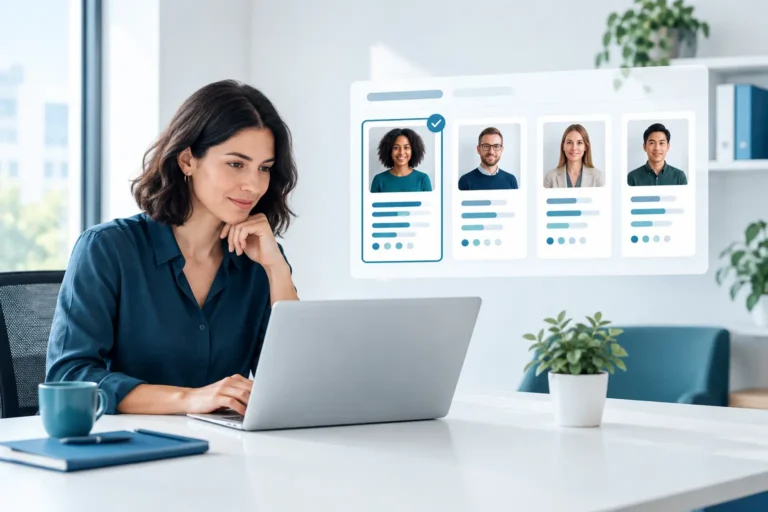
In recruiting, automation reduces manual coordination. Applications can flow into one system, interview stages can trigger reminders, and hiring teams can keep feedback in a structured process instead of scattered messages. AI can assist by organizing candidate information, helping recruiters surface relevant profiles, and reducing the admin around status updates.
Onboarding is another obvious win. When a new hire joins, a chain of tasks usually follows – contracts, policies, role setup, training, documentation, and equipment requests. If those actions depend on people remembering each step, delays are guaranteed. Automation creates consistency. AI support can also answer standard preboarding or first-week questions, which cuts back on repetitive back-and-forth.
Employee support is often underestimated. HR teams spend a surprising amount of time answering the same questions about leave, policies, documents, training, and processes. An embedded AI assistant can handle many of those requests instantly, provided it is grounded in current company data and permissions. That does not replace HR. It gives HR time back for cases that actually require context and judgment.
Compliance administration is where the business case becomes harder to ignore. SMEs in Europe deal with documentation standards, training requirements, privacy obligations, and policy management that become harder to control when records are spread across systems. Automation helps assign training, track completion, store employee documents, and create an auditable process. AI can support by surfacing gaps, prompting missing actions, and making policy information easier to access.
The business case is efficiency, but the real issue is control
Cost savings get attention, but for many decision-makers the larger concern is operational control. When HR runs on spreadsheets and disconnected tools, leaders lose visibility. They cannot quickly answer basic questions such as who has completed mandatory training, where onboarding is delayed, how many open roles are stuck in review, or whether employee records are consistent.
AI powered HR automation helps centralize that picture. Instead of relying on manual follow-up, the system becomes the source of truth for workflows, records, and recurring employee interactions. That improves speed, but it also improves confidence. Teams know what has been done, what is overdue, and where action is needed.
This is especially important for founder-led and operations-led organizations. In many SMEs, HR responsibility is shared across a lean team. The business cannot afford process drift every time someone is on vacation or a key admin leaves. Good automation creates continuity.
What to look for in an AI-powered HR system
Not every platform that mentions AI is useful in practice. Buyers should focus less on flashy claims and more on whether the system solves real operational problems.
Start with breadth. If recruiting, onboarding, employee records, leave management, performance, training, and analytics are split across separate tools, automation breaks down quickly. The more fragmented the stack, the more manual work remains between each step.
Next is data quality. AI is only helpful when it works from accurate, current information. If policies are outdated, records are incomplete, or permissions are weak, the output becomes unreliable. This is why a unified HRIS matters more than a bolt-on chatbot.
For European businesses, compliance and hosting should not be treated as secondary details. Data residency, GDPR alignment, access controls, and auditability are core buying criteria. AI features may save time, but they cannot come at the expense of governance.
Usability also matters. A system designed for large enterprises can overwhelm a 100-person company with configuration options it will never use. SMEs usually need structured workflows, straightforward setup, transparent pricing, and support that helps them go live without a major IT project.
This is where a platform like Cognitis.Cloud fits the market well: one system, practical automation, AI-assisted HR support, and European hosting built around the needs of companies that are too large for spreadsheets but too lean for enterprise complexity.
The trade-offs leaders should consider
AI powered HR automation is not a shortcut to fixing weak processes. If approval rules are unclear, policies are inconsistent, or ownership is undefined, automation can simply make confusion happen faster. Before scaling automation, businesses need a clear baseline for how work should move.
There is also a change management component. Managers may resist new workflows if they are used to handling requests informally. Employees may still email HR out of habit. Adoption improves when the system is easier than the old process and when leadership reinforces consistent usage.
Another trade-off is deciding what should be automated and what should remain human-led. Not every HR interaction should be routed through AI. Sensitive employee relations issues, performance concerns, and nuanced case decisions still require people. The strongest model is selective automation – high volume and low complexity tasks handled automatically, with clear escalation paths for everything else.
How SMEs should approach implementation
The best implementations are phased. Start with the areas causing the most friction, usually recruiting workflows, onboarding, leave management, and employee support. Once those processes are centralized, expand into performance reviews, learning, and analytics.
It also helps to define success in business terms. Hours saved is useful, but it should connect to outcomes leaders care about: faster time to hire, fewer onboarding delays, lower HR ticket volume, better policy completion, and cleaner reporting.
Ownership matters as much as software. One person should be accountable for rollout, even in a small team. That does not mean HR owns everything alone. Operations, managers, and IT or security stakeholders may all need input, especially when compliance and data access are involved.
Finally, keep expectations realistic. You do not need full process transformation in month one. The practical goal is to remove obvious inefficiencies, improve consistency, and create a system employees will actually use.
Why this matters now
SMEs are under pressure from both sides. Employees expect faster, simpler support. Leadership expects better control, cleaner reporting, and lower administrative overhead. At the same time, compliance obligations are not getting lighter, and hiring a larger HR team is often not financially realistic.
That is why ai powered hr automation has become a practical operating decision rather than a future-facing experiment. For the right business, it cuts repetitive work, improves employee experience, and gives leaders a clearer grip on process execution. Not because AI is fashionable, but because fragmented HR operations are expensive in ways that rarely show up neatly on a budget line.
The companies that benefit most are usually not the largest. They are the ones growing fast enough to feel the friction and disciplined enough to replace patchwork processes before they become permanent.