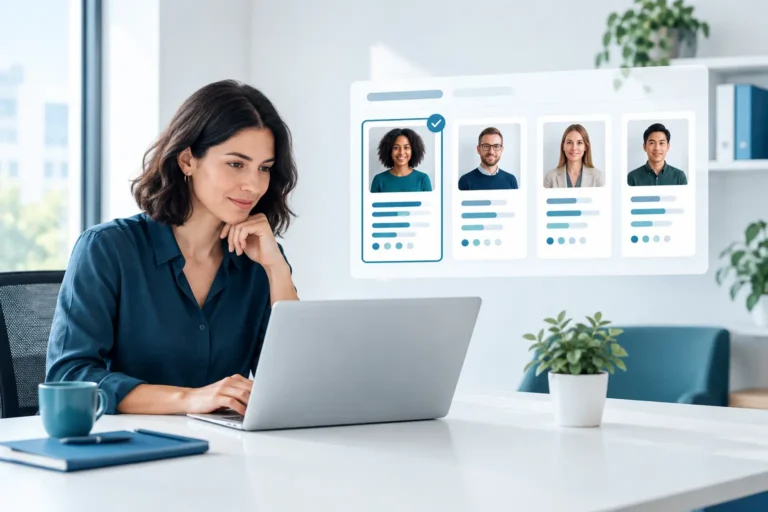
HR sits at the centre of every successful business, yet many teams still spend too much time on repetitive admin and disconnected data. As expectations around speed, accuracy, and employee experience keep rising, AI built into Human Resources Information Systems (HRIS) is helping HR teams work in a smarter, more practical way. Instead of replacing people, it removes friction from everyday processes so HR can focus more on strategy, support, and growth.
Automating Admin So HR Can Focus on People
Many HR professionals still lose valuable time to tasks like payroll, attendance tracking, and benefits administration. These jobs are essential, but they can easily consume the day and leave little room for higher-value work such as workforce planning, employee development, or culture initiatives. AI in HRIS platforms helps by taking care of repetitive processes faster and with fewer errors.
Think about payroll calculations, tax deductions, bonuses, and compliance checks being handled automatically in the background. Attendance tracking can sync with schedules and timekeeping tools, while benefits administration becomes easier through self-service options that give employees more control. According to a 2024 SHRM study, organisations using AI for HR tasks save up to 30% of administrative time, and 93% of employers report noticeable efficiency gains. That means HR teams can spend less time on paperwork and more time on work that makes a real difference.
Turning HR Data into Useful Insight
HR teams have access to a huge amount of data, but having data is not the same as knowing what to do with it. AI-powered HRIS platforms help make that information easier to understand by turning it into clear, actionable insight. From workforce trends to employee engagement, AI can highlight patterns that support better decisions.
For example, predictive analytics can help forecast hiring needs or identify turnover risks before they become bigger problems. AI can also analyse engagement surveys and performance data to reveal where support, training, or wellbeing initiatives may be needed most. A 2024 Gallup study found that companies using data analytics saw a 25% increase in employee productivity. With the right insight at the right time, HR can become more proactive and better equipped to support both employees and business goals.
Built to Adapt as Your Business Grows
No two organisations have exactly the same HR needs. That is why AI-powered HRIS platforms are designed to be flexible, giving businesses the option to tailor features around their size, structure, and goals. Whether you are a small company building processes for the first time or a larger organisation managing more complexity, the right platform can grow with you.
Smaller businesses often benefit from simple tools that cover the essentials without creating extra admin. Mid-sized companies may need stronger reporting, performance tracking, or hiring support, while larger organisations often rely on deeper compliance tools and workforce planning capabilities. A 2024 Deloitte report found that AI in hiring can reduce cost per hire by up to 30%. Cloud-based HRIS platforms also make it easier to scale, stay current, and respond to change without constant manual updates.
Why It Matters for Cost, Efficiency, and Employee Experience
Using AI in HR is not only about saving time. It is also about creating a more efficient function that can support the wider business more effectively. In 2024, companies spent an average of $1,500 per employee on HR operations, with a significant share of that budget tied to administrative work. AI-powered HRIS platforms help reduce that burden by automating manual processes and improving how resources are used.
There is also a clear impact on the employee experience. A 2024 IBM study found that AI can resolve up to 80% of routine employee questions, helping people get answers faster while reducing pressure on HR teams. When HR has more time for meaningful conversations and less time tied up in admin, employees feel better supported. The result is a department that is more responsive, more strategic, and better aligned with business priorities.
What This Looks Like in Practice
The value of AI in HRIS becomes even clearer in real-world use. Manipal Health Enterprises used an AI-powered assistant to reduce new hire turnover by 5% each year and save more than 60,000 hours across employees and HR staff. Nomic Foundation moved away from manual spreadsheets to an AI-enabled HRIS and saved more than $120,000 in administration costs while improving hiring and onboarding. Examples like these show how AI can help HR move from being process-heavy to genuinely strategic.
Ready to Make HR Simpler?
AI is already changing the way HR teams operate. By reducing repetitive work, improving decision-making, and supporting growth, AI-powered HRIS platforms give teams more space to focus on people rather than process. For businesses looking to improve efficiency, reduce costs, and create a better employee experience, this is quickly becoming a practical next step rather than a future idea.
If you are exploring ways to modernise your HR operations, now is a good time to see what AI can do in practice. Book a demo, review your current processes, or start by identifying one task your team would benefit from automating first.