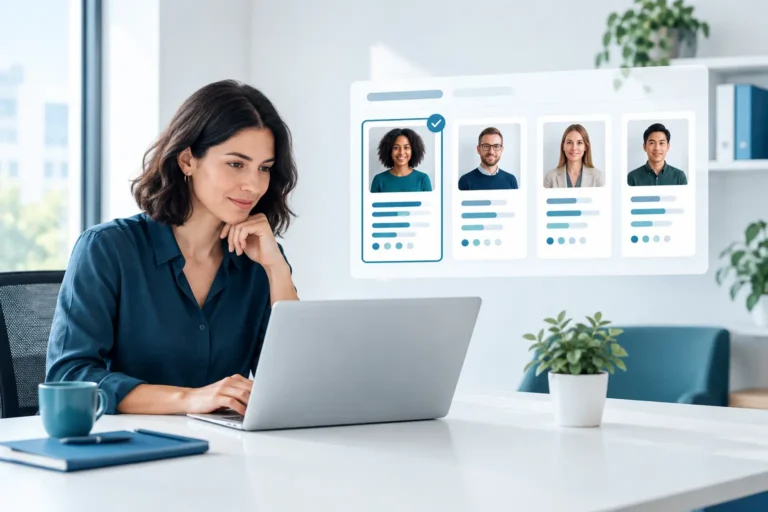
Why businesses are moving to all-in-one HR platforms
HR work rarely becomes difficult because of one big problem. More often, it becomes messy because information is spread across too many tools, spreadsheets and email threads. Recruitment lives in one system, leave requests in another, payroll somewhere else, and basic employee data gets updated manually in several places. For growing companies, that setup creates delays, duplicate work and avoidable mistakes.
An all-in-one HR platform brings those tasks together in one place. Instead of switching between disconnected tools, HR teams and managers can manage hiring, onboarding, employee records, time off, documents, performance and reporting from a single system. The main benefit is not complexity for its own sake. It is clarity, consistency and less administrative overhead.
That approach fits the way C2 thinks about HR technology: software should make daily work simpler, more transparent and easier to scale. The goal is not to add another layer of process. It is to give SMEs a practical system that helps them stay organised, compliant and efficient without paying enterprise-level prices.
Key benefits of an all-in-one HR platform
One of the biggest advantages of an all-in-one HR platform is that it reduces repetitive admin work. Hiring workflows, onboarding steps, document collection and approvals can be handled in one place, with less manual chasing and less re-entering of the same information. For HR teams, that means more time for people-focused work and fewer hours spent on routine coordination.
It also gives companies better visibility. When employee data, absences, contracts, performance notes and reports sit in the same system, it becomes much easier to understand what is happening across the business. Leaders can spot trends earlier, HR can answer questions faster, and decisions are based on current information rather than fragmented records.
Another practical benefit is a better employee experience. People can update their details, request leave, access documents and complete routine tasks without waiting for HR to handle everything manually. At the same time, compliance becomes easier to manage because key records, permissions and deadlines are easier to track. For European SMEs in particular, that balance between usability and control matters.
For C2, these benefits matter because they solve everyday operational problems. The value is not in promising a complete HR transformation overnight. It is in giving companies a straightforward platform that helps them work in a cleaner, more reliable way from day one.
How an all-in-one HR platform simplifies daily HR operations
When HR processes are connected, work moves faster. Employee data only needs to be entered once, and it can then flow into the relevant parts of the system, whether that is onboarding, leave management, payroll inputs or reporting. That reduces duplication and lowers the chance of inconsistent records.
This kind of integration is especially useful during moments of change. A new hire can move from candidate to employee without starting from scratch. A role change can be reflected across documents and workflows more easily. Managers and HR teams spend less time correcting records and more time making sure people have what they need.
Automation also helps, but only when it is applied to the right tasks. Reminders, approvals, document requests and standard workflows are good examples. Used well, automation removes friction from repeatable processes without making HR feel impersonal. That is an important distinction for C2: technology should support better human processes, not replace them.
In practical terms, the result is a more dependable HR operation: fewer bottlenecks, clearer accountability and a system that can keep up as the business grows.
Why cloud infrastructure matters
For most SMEs, choosing an HR platform is not just about features. It is also about reliability, security and ease of access. A cloud-based setup gives teams the flexibility to work from different locations while keeping data in a central, controlled environment. That matters for modern companies with distributed teams, multiple offices or hybrid working patterns.
Security and compliance are part of that conversation too. HR systems hold sensitive personal information, so businesses need a platform that supports secure access, structured permissions and responsible data handling. For European companies, GDPR is not a side issue. It is a core requirement, and the platform should make compliance easier rather than harder.
Scalability is another practical benefit. As the company grows, the HR system should be able to grow with it, without forcing a disruptive migration to a completely different solution. C2’s philosophy is that growing businesses should have access to robust HR infrastructure and transparent pricing, without being pushed into unnecessary complexity.
That is why the right platform is not simply the one with the longest feature list. It is the one that remains useful, clear and cost-effective as the organisation evolves.
What successful implementation looks like
Implementing an all-in-one HR platform works best when companies start with their real operational needs. That means looking closely at where time is lost, where errors happen and which processes create frustration for HR, managers or employees. A good implementation is not about copying every possible workflow into software. It is about simplifying the right ones.
Configuration should support the way the business actually works. Roles, approval steps, document structures and employee journeys need to be clear and practical. Involving HR, managers and relevant operational stakeholders early usually leads to a smoother rollout and fewer adjustments later.
Integration matters as well, especially where payroll, attendance, benefits or finance processes depend on HR data. The more reliably information moves between systems, the less manual correction is needed. That improves accuracy and builds trust in the platform over time.
From C2’s perspective, successful implementation is not measured by how many features are switched on. It is measured by adoption, clarity and whether the platform genuinely reduces admin for the business.
When the setup is pragmatic and well-structured, teams usually see value quickly: cleaner records, simpler workflows and fewer HR tasks slipping through the cracks.
What to expect from the next generation of HR platforms
HR software will continue to evolve, but the most useful innovations are likely to be the ones that solve practical problems rather than add novelty. Businesses do not need more digital noise. They need tools that help them act faster, stay compliant and support employees more consistently.
AI will play a role, especially in areas like document handling, candidate screening, knowledge support and reporting. But for most SMEs, the real question is not whether AI is included. It is whether it saves time in a trustworthy and transparent way. C2’s philosophy is that automation should be useful, understandable and grounded in real operational value.
Employee experience will also remain important, though not in a superficial sense. Simple interfaces, clear workflows and fast access to the right information often make a bigger difference than flashy features. When people can complete routine HR tasks without confusion, both satisfaction and efficiency improve.
Mobile access and flexibility will continue to matter as work patterns stay distributed. Employees and managers increasingly expect to handle approvals, requests and updates wherever they are. A modern HR platform should support that without sacrificing oversight or security.
Ultimately, the strongest all-in-one HR platforms will be the ones that combine simplicity, transparency and practical value. For growing businesses, that means fewer disconnected tools, more reliable processes and a better foundation for scaling. That is the kind of outcome C2 is built to support.
If you are evaluating HR software, the most important question is not which platform promises the most. It is which one will make everyday HR work clearer, lighter and easier to manage for your team.